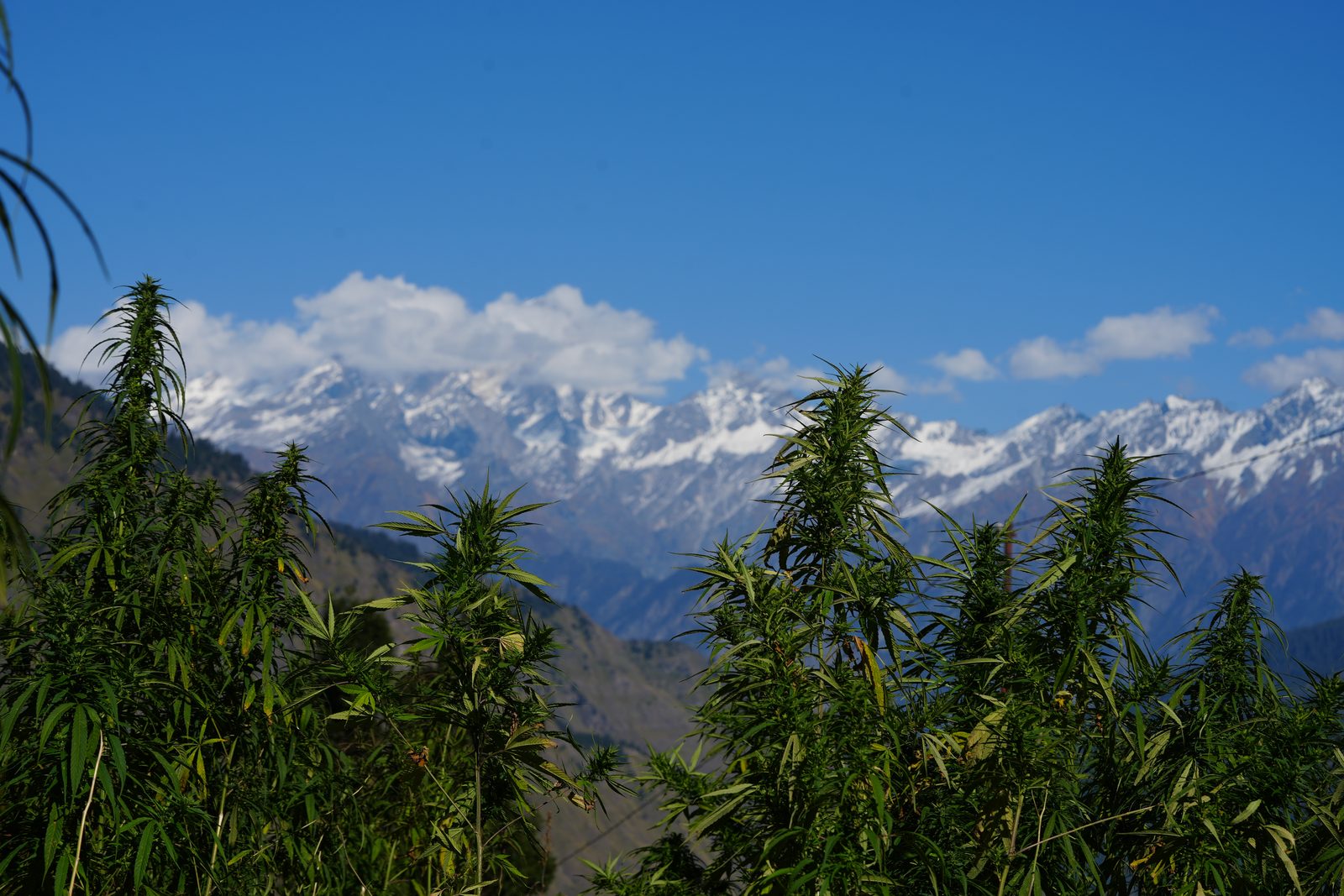
Uttarakhand · October 2025
It grows here without being planted. That is the whole argument.
Satvic Seeds
अन्नं ब्रह्मेति व्यजानात्
He knew food to be Brahman. — Taittirīya Upaniṣad III.2
A working seed bank for the landraces of the Himalaya — the rare, the secluded, and the ones with one season left in them.
The work
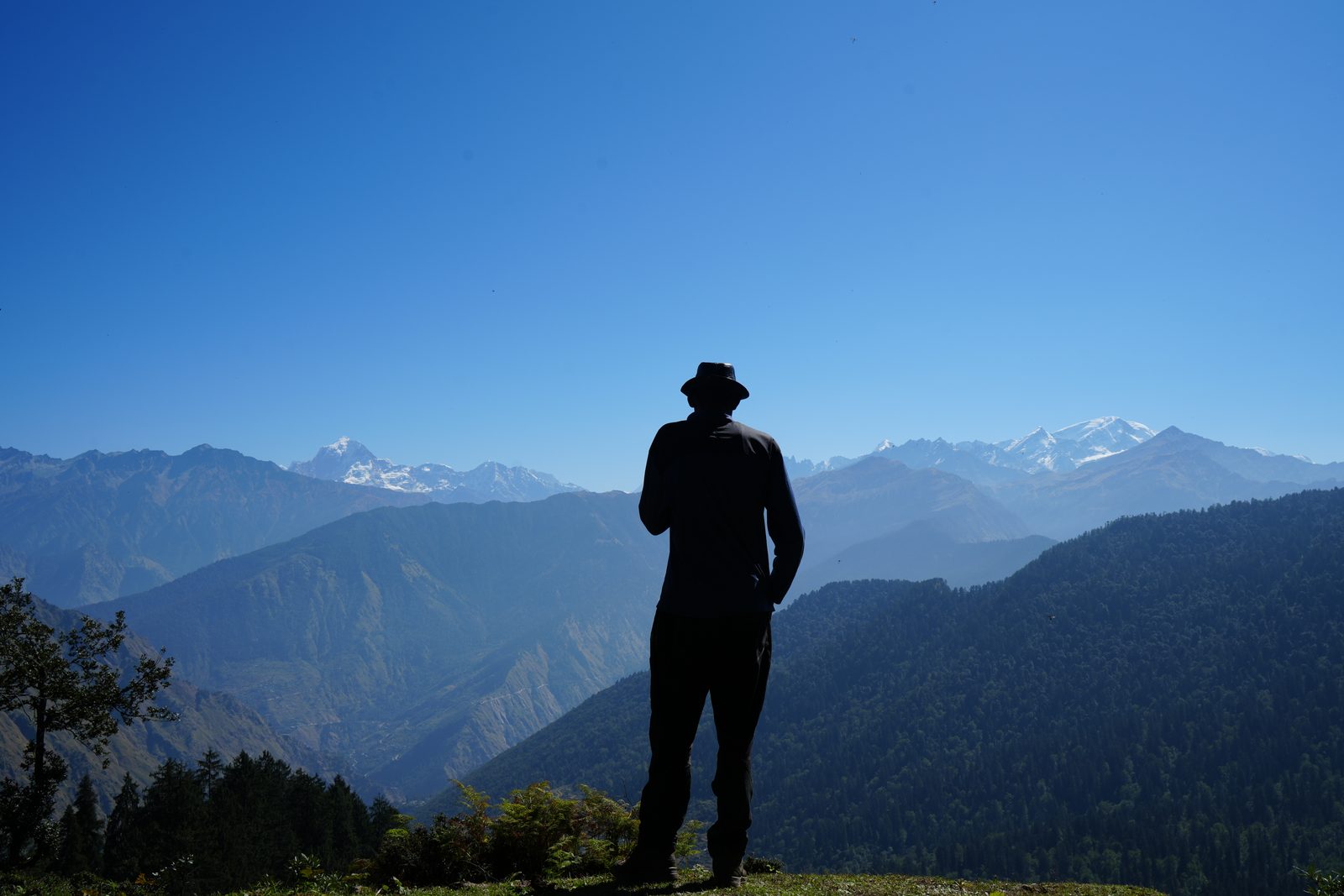
Since 2018 we have walked the high valleys of Uttarakhand looking for crops that never entered a catalogue — millets sown unbroken for four generations, grains that ripen in sixty days at two thousand metres, cannabis landraces held in single side-valleys, fruits and herbs that exist in one microclimate and nowhere else on earth. We collect with consent, we grow it out, we return seed, and we publish the record.
Every seed below begins as a point on this map.
The Atlas
Thirteen states and hill regions on one arc. Since 2018 our work has covered one of them, deeply — select any state for its status, or enter Uttarakhand for the ten valleys. Brass points hold accessions; glacier points are natural landrace populations.
We publish the valley and the elevation band, never the coordinates — a rare population with a public pin is a population that is gone in two seasons.
How we hold it
Nothing enters the vault without a record of the household that kept it and an agreement on what they receive when it earns. No consent record, no listing.
Most of what we hold is not for sale and never will be. Duplicates go to the national gene bank. The ratio is the point.
Every accession is multiplied on guardian plots at its own altitude. A seed that isn't sown every few seasons is a seed you are quietly losing.
We publish the district and the elevation. We never publish coordinates. A rare population with a public pin is a population that is gone in two seasons.
What we hold
Grains, millets and pulses that never entered a seed catalogue — each still sown by the households who kept it. These are the lines we can offer openly; the genetics sit behind the Register.
Botanical plates — photography from the archive replaces these as accessions are documented.
It grows here without being planted. That is the whole argument.
Why we sell
A landrace does not live in a vault. It lives because a farmer has a reason to plant it again next season. The fastest way to lose a variety is not to collect it — it is to make it worthless. A market is what keeps it in the ground.
The lines we offer pay for the ones we do not. No grant runs out, no donor changes their mind. What sells keeps the rest alive, and a fixed share goes back to the household that kept it.
Selections are drawn from a population by traditional mass selection over seasons — no hybridisation, no genetic modification. The parent population is kept whole and is never for sale. We never select the population.
Every seed carries its passport
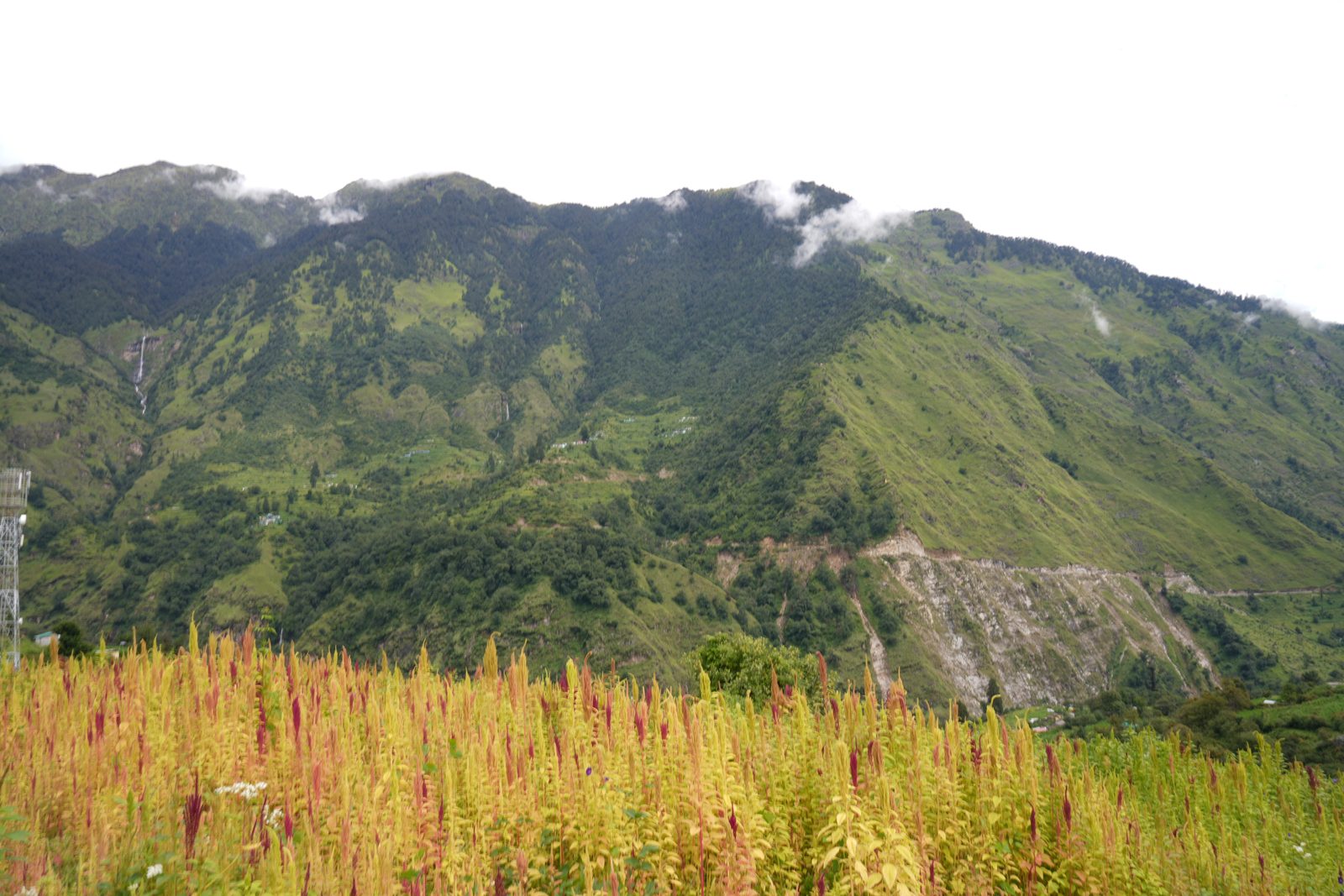
Amaranthus hypochondriacus
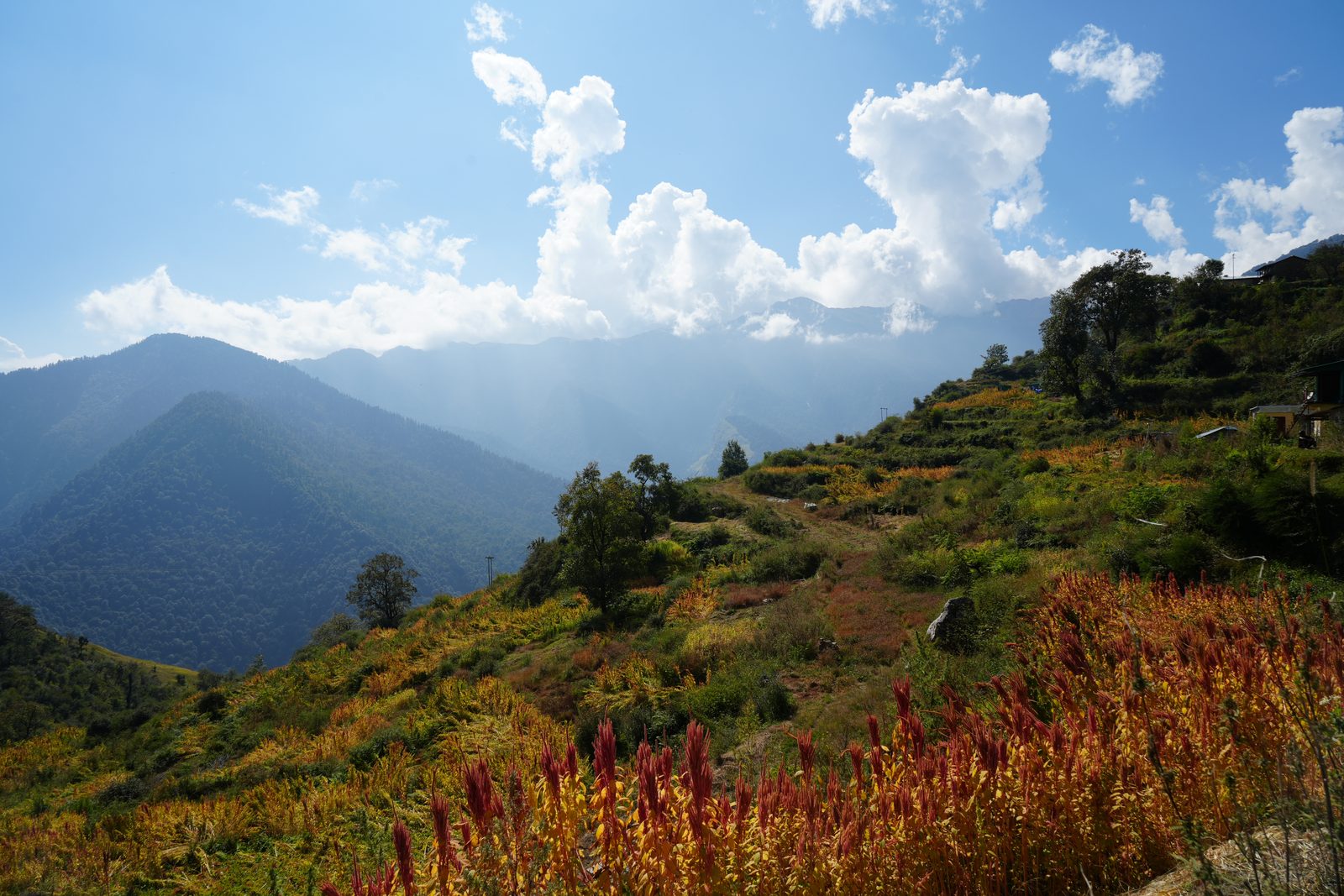
Collected from holdings that have sown it alongside the grain terraces for as long as anyone there can date. It coloured a full three weeks ahead of the lowland material we grew beside it — the trait we went looking for, found in the last place still carrying it.
| Collected | September 2024 |
|---|---|
| Region | Chamoli — Uttarakhand |
| Altitude | 1,900 – 2,200 m band |
| Guardians | Household cluster — named on request, with consent |
| Germination | Lot under test — published when it closes |
| Status | Held in trust — not offered |
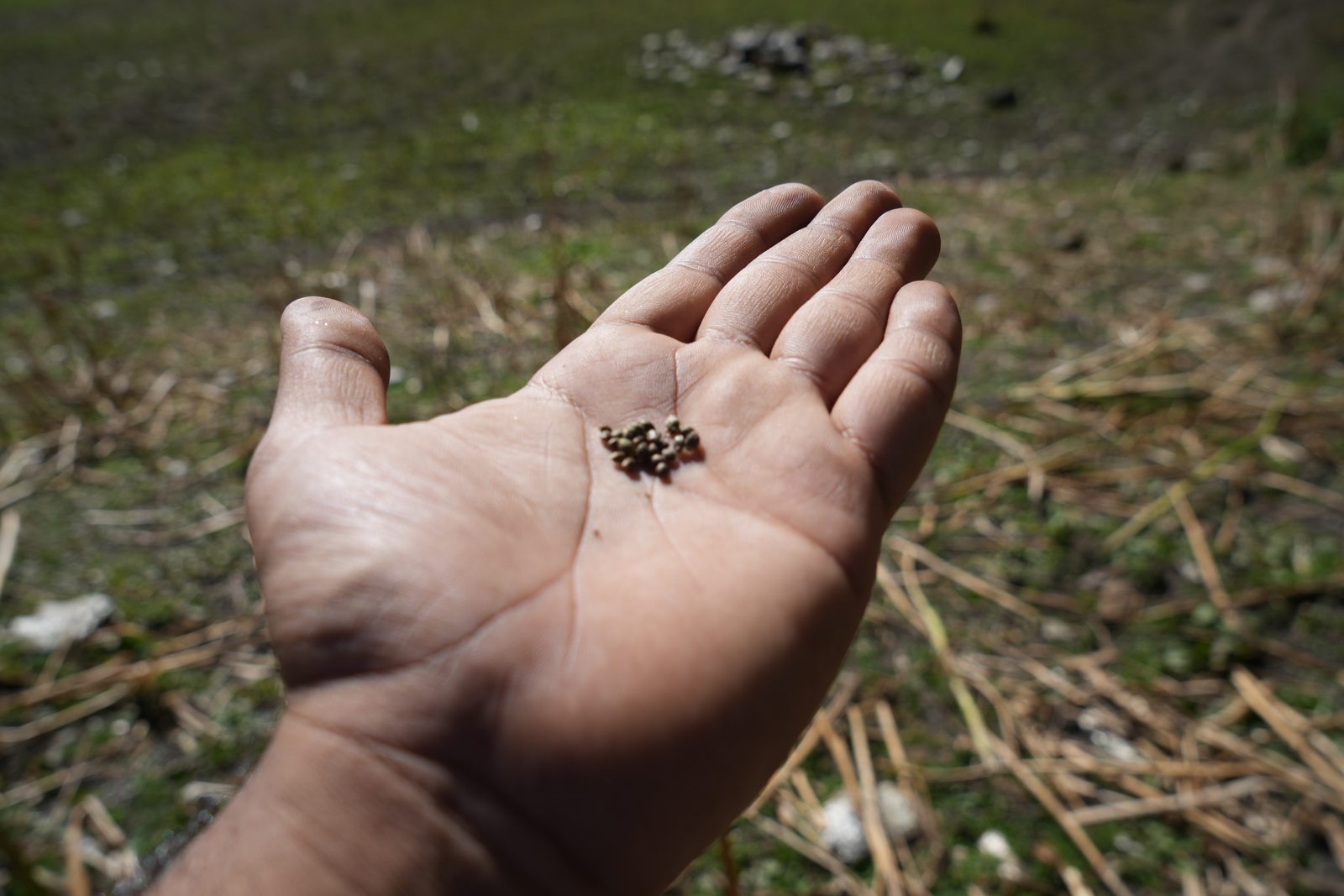
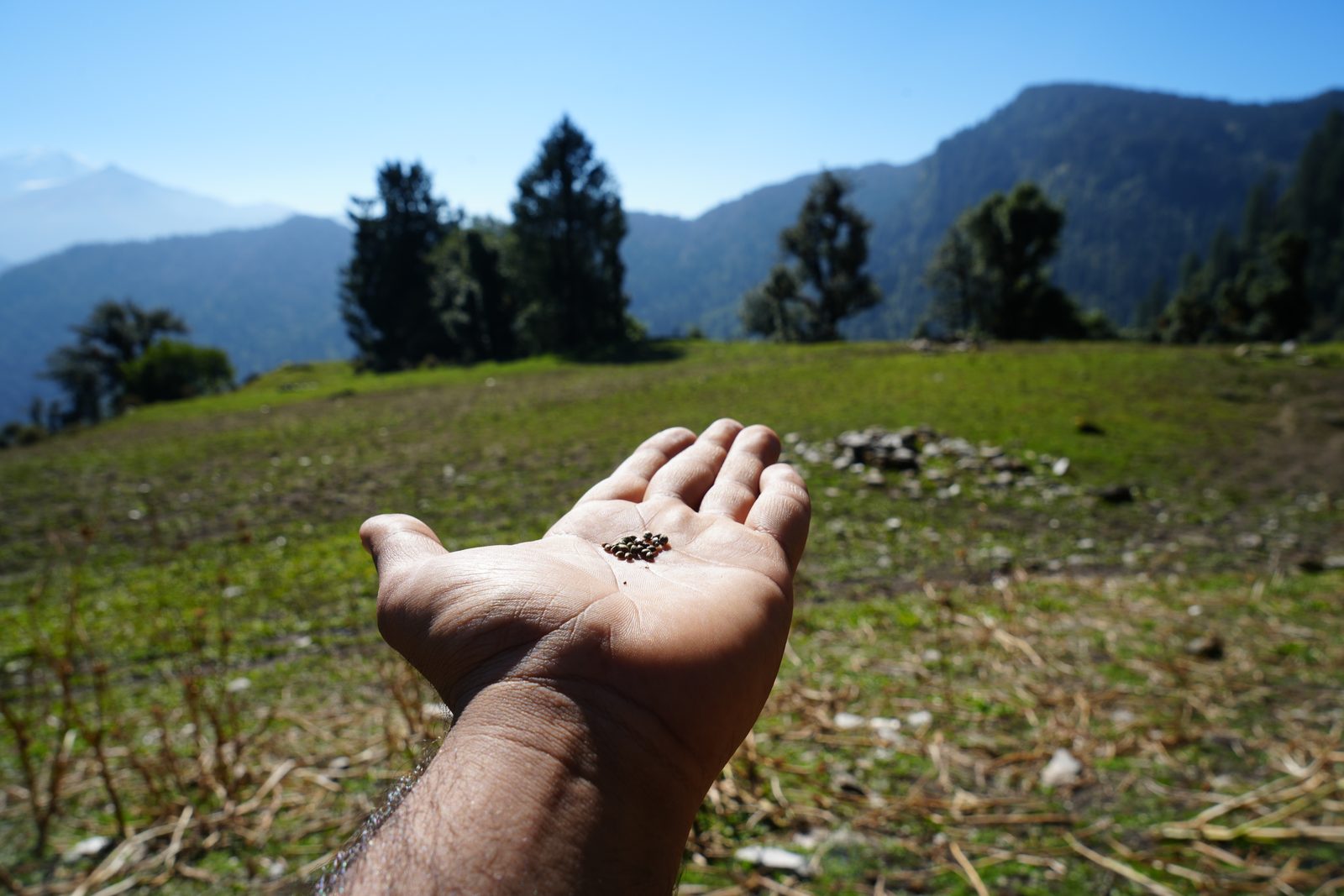
In the field since 2018
The register opens first to a small list
We will write perhaps six times a year — when an expedition is published, when a holding is released, and when seed of something rare is actually in hand. Nothing else.
Himalayan Phytosciences Pvt Ltd · Dehradun, Uttarakhand