Satvic Seeds/Stewardship
Every accession in the vault came from a household that kept it alive without being asked to, and without being paid for it. Stewardship is the part of this business that says what they get back — stated in full, and binding on us whether or not a line ever earns anything.
What this page deliberately does not name. No household, no village, no rate, no agreement reference appears here. Naming a grower is how a competitor finds them, and naming a locality is how a rare population gets stripped — the same reason the Atlas publishes the valley and never the plant.
The commitments below are complete and public. The identities behind them stay ours to protect until the people concerned ask otherwise, and the filings appear here once they are already public record — at which point they prove something instead of exposing someone.
The ratio
That ratio is the whole argument. A seed bank that sells everything it finds is a supplier; one that holds most of what it finds, and grows the rest out to keep it alive, is doing conservation and funding it with a catalogue. We would rather be judged on the first number than the second. It is funded by the catalogue, not by grants — which is why the catalogue exists.
The covenant
These terms are the same for every household we work with. They do not depend on whether a line turns out to be commercially interesting, and they do not lapse if we stop selling it.
Every season we grow a line out, seed goes back to the household it came from — before any of it is offered anywhere else. They are never left dependent on us to keep growing their own crop.
If a line earns, the household that kept it shares in that revenue for as long as it sells — not a one-time collection fee. The share is fixed in the agreement before any material leaves the valley.
Credit belongs to the keeper. Households decide whether they are named publicly, named to buyers only, or not named at all, and they can change that decision at any time.
Consent is per-accession and withdrawable. If a household wants a line taken out of the catalogue, it comes out — and no accession is ever published or sold without a consent record on file.
Where a landrace is registered, it is registered as a farmers' variety with the community as applicant — not as our intellectual property. We do the paperwork; they hold the right.
Material is deposited into the national gene bank as backup. If our store is lost, or we cease to exist, the seed survives outside our control.
Standing
Access-and-benefit-sharing is a legal duty in India, not a marketing position. Reference numbers appear here as each filing becomes public record — until then the status is stated plainly rather than dressed up.
We would rather show you an honest board than a row of ticks. Anything marked in preparation is exactly that — under way, not claimed. Nothing is sold on the strength of a filing that does not yet exist.
The guardians
We publish how many households keep our accessions and roughly where, because that is the measure of whether this works. We do not publish who they are, which valley they farm, or which line sits with which family.
Become a guardian
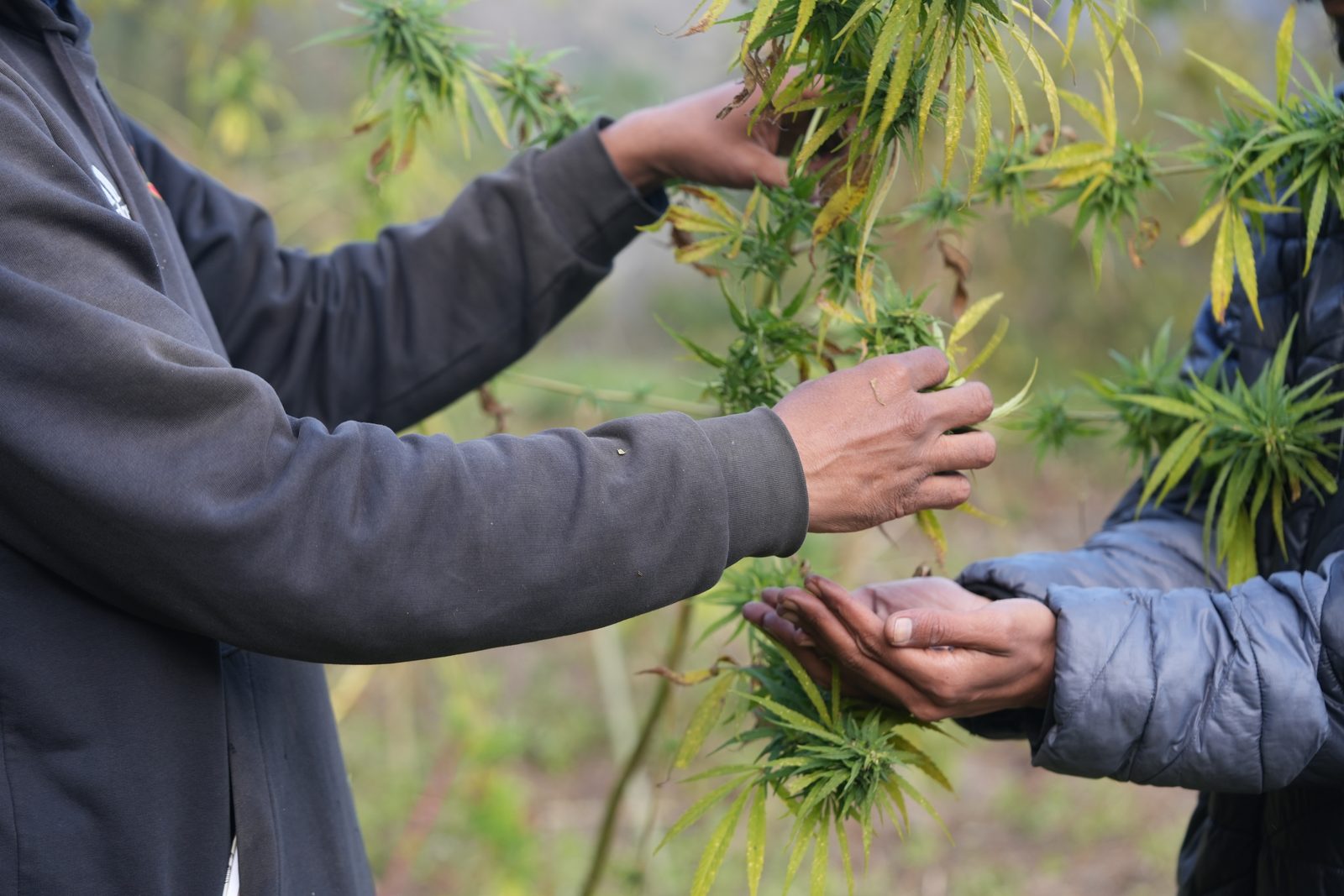
We are looking for households in the Uttarakhand hills still sowing a landrace they inherited — a millet, a bean, a rice, a hemp line, anything kept going because it was always kept going. You keep growing it. We characterise it, multiply it, register it in your community's name, and it enters the vault under the covenant above.
There is no cost to you, and no obligation to sell us anything.
Tell us the crop and the district — nothing more is needed to start. We will come and see it.
Enquiries are read by the collection team, not a mailing list. We do not add growers to any list.